
Fall Seasonal Produce Guide: Fresh, Healthy, and Budget-Friendly Foods
Celebrate autumn with fruits and vegetables that can help boost wellness and cut costs this fall.
Written by Shrutiben Bhakta, registered dietitian, and Alexis Cahill, communications specialist
Fall is around the corner: the kids are back in school, football season has just begun, and the days are (finally!) cooling off. With the change of seasons comes a change in available fruits and vegetables, and eating seasonal produce provides a more nutritious, well-balanced diet. Incorporating fall seasonal produce into your meal plan offers benefits such as:
- Fresh flavor – local seasonal produce is naturally ripened, which means that you get to experience it at peak flavor and natural texture! It also means it will hold up longer at home, making it easier to plan meals when you have limited time.
- Savings – when produce is in season, it is more abundant, which generally makes it more affordable. Check additional coupons and talk to the farmers at your local farmer’s market for more discounts!
- Sustainability – local seasonal produce is usually less energy-intensive to grow and transport. Thus, you can support local growers while minimizing transportation-related waste!
What Produce Is in Season in Missouri and Illinois in the Fall?
Here are four seasonal fruits and vegetables to incorporate into your diet this fall:
- Apples –
 Apples are a popular fall fruit with several varieties grown right here in Missouri. They are rich in fiber, which can help manage blood sugar and cholesterol, as well as vitamin C and potassium. Apples can be eaten raw as a snack, or you can chop them up and cook them as part of a meal or dessert. For a quick and filling breakfast, try oatmeal or a quinoa bowl topped with sliced apples.
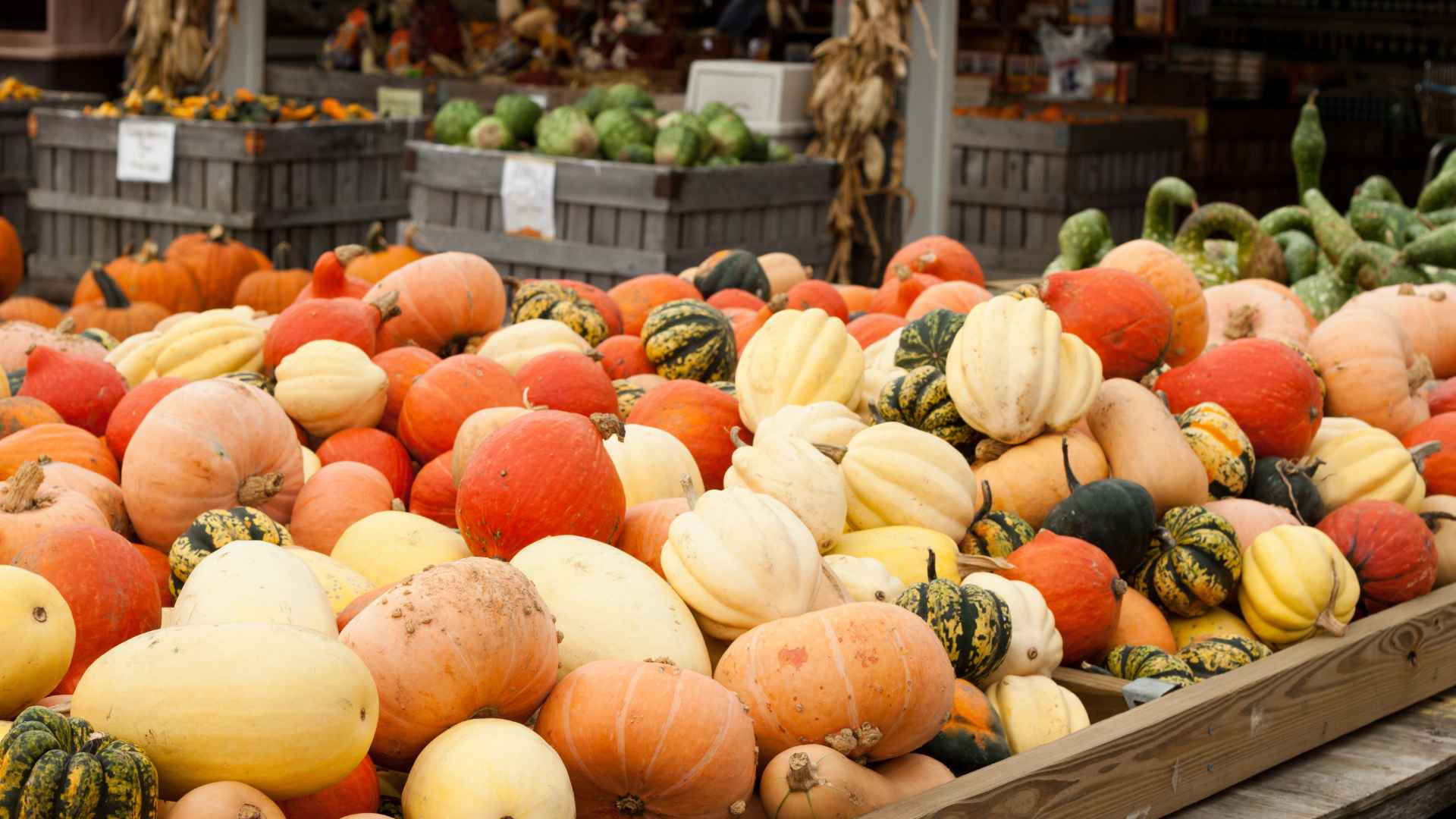
- Squash – In the fall, squash can be both part of your décor and part of your diet. Winter squash varieties, such as butternut, acorn, and spaghetti squash, are rich in complex carbohydrates for long-lasting energy. They are also rich in fiber and several vitamins and minerals, including potassium, magnesium, and B vitamins, which are essential for energy production and brain health. Winter squash is best prepared roasted. Check out this video to learn a simple but delicious way to prepare acorn squash.
- Kale – Kale is a dark leafy green vegetable that is at its peak season throughout the fall and winter. It’s an excellent source of vitamin K, which supports blood clotting and bone health, and a good source of vitamin C, which can help support the immune system during the colder months. Kale can be eaten raw as the base of a salad or can be cooked and incorporated into a side dish or meal, for instance in this customizable Kale Pesto Pasta.
- Sweet Potatoes – Sweet potatoes are a delicious addition to fall recipes, providing a good source of complex carbohydrates and fiber to your diet. They are also rich in beta-carotene, which is important for eye health and is also responsible for the tuber’s deep orange color. Like regular potatoes, sweet potatoes can be baked, mashed, fried, or roasted as a side or part of a meal. They also make a great base in this Sweet Potato Curry recipe.
For more information about what foods are in season, visit the USDA’s produce guide.
Where Can You Find Fresh Seasonal Produce?
There are a few ways to find locally grown, fall seasonal produce in the St. Louis area outside of the grocery store:
- OFS MetroMarket – MetroMarket is a mobile farmers market that travels to areas around the St. Louis bistate area with limited access to fresh, healthy food, offering goods at a significantly lower cost than retail grocers. Find a location near you.
- Farmers Markets – Many local farmers markets stay open through November and accept SNAP benefits. It’s a great way to support local growers and get fresh produce. To find a farmer’s market near you, click here.
- Food Assistance Sites – Food pantries and community distribution sites may also offer seasonal produce, especially during peak harvest times. Find a food pantry near you by calling the hunger hotline at (314) 726-5355 x1 or visiting our Find Food page.
Easy Ways to Cook with Seasonal Produce
No complicated recipes required! Using simple cooking methods, you can create delicious meals without spending too much time and effort. Remember: Ingredients can easily be swapped out depending on what’s available and what you already have at home. Easy preparation ideas include:
- Roasting: Toss vegetables like broccoli, squash, or beets with oil, salt, and pepper and roast until tender.
- Sautéing: Cook cabbage, radish tops, or broccoli quickly in a pan with oil and garlic.
- Salads: Toss a combination of fruits and veggies together, like Kale or spinach, sliced pear, pumpkin seeds, and cranberries to make a nutritious seasonal salad.
- Sheet‑pan meals: Roast vegetables alongside a protein like chicken, sausage, or tofu for a one‑pan dinner for an easy clean-up.
- Pasta and rice dishes: Add veggies to pasta, rice, or noodle dishes for extra nutrition, like in Pasta Primavera but with fall seasonal produce instead!
- Soups and stews: Cooler weather is the perfect time to make soups and stews, which are a great option for stretching ingredients and using up what you have on hand. Try out this black-eyed pea soup with collard greens or an Italian lentil soup.
Check out our Recipes page for more budget-friendly, time-friendly ideas.
This autumn, take advantage of fall seasonal produce to boost nourishment, stretch your grocery budget, and simplify mealtime. Happy Fall!