
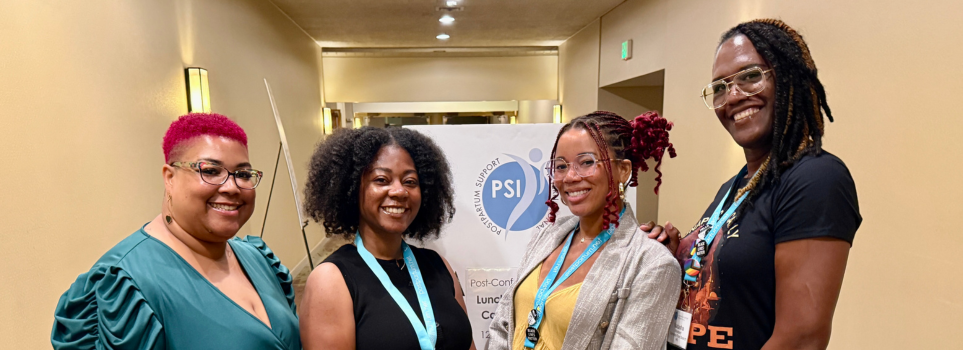
This week, Operation Food Search’s Nourishing Healthy Starts (NHS) program team joined more than 1,200 perinatal health professionals, researchers, and advocates from around the country and shared the positive impact of providing fresh food and supportive services during and after pregnancy.
The 39th Annual Conference of Postpartum Support International, held June 24–28 at the Westin Bonaventure Hotel in Los Angeles, invited the NHS team to speak to others working to improve maternal mental health. NHS Manager Natasha Woodard and Maternal Health Advocates Ashley Farmer, Brya Johnson, and Jazzy Kimbrough took the podium to share what OFS has built here in St. Louis.
The team’s presentation highlighted the success of the program, as well as the connection between food insecurity and maternal mental health.
Program Impact
Healthy birth weight is a key indicator of long-term health, reducing the risk of complications for infants and lowering the likelihood of extended neonatal intensive care stays. Nourishing Healthy Starts not only supports families—it has the potential to reduce long-term healthcare costs.
Since September 2023:
- 200+ babies have been born to program participants
- Nearly 90% of babies are born at a healthy birth weight
- Families receive consistent access to nutritious food and support during a critical life stage
Program Components
Nourishing Healthy Starts connects pregnant women and all birthing people and their families with nutritious good and resources for a healthy household, including:
- Biweekly produce and grocery boxes that deliver fresh, locally-grown produce, protein, dairy, and grains
- Cooking classes and problem-solving to help families build skills and cook nutritious food on a budget
- Safety net enrollment assistance with federal programs such as SNAP and WIC
- Maternal health support through care coordination and connections to additional resources and the support of peers
Why Nourishing Healthy Starts Matters
Missouri has among the highest maternal and infant health disparities in the country, with a preterm birth grade of D- on the 2023 March of Dimes Report Card. In St. Louis City, the grade is F, with a 12.5% preterm birth rate (born before 37 weeks). Poor prenatal nutrition is linked to preterm birth and low birth weights, as well as gestational diabetes, preeclampsia, and delivery complications.
In addition, deliveries for babies born underweight cost $44,000 more than babies delivered at a healthy weight. These infants are also at risk of being admitted to the neonatal intensive care unit (NICU) which costs $76,000 on average per stay.
But the numbers only tell part of the story. What makes NHS work is the relationship at its center: a Maternal Health Advocate who walks alongside each participant, ensuring they get the food and resources their families need to stay healthy.
Real Families, Real Impact
Sharon (not her real name) had lost her job in the months prior to joining the NHS program, leading to food insecurity and high stress. She expressed feeling overwhelmed by the combination of her pregnancy, parenting her other young children, and trying to stay on top of household builds. In addition to arranging biweekly food boxes, her maternal health advocate helped connect her to support for her utility bills and employment resources. Her family also enjoyed the cooking demonstrations offered in the OFS Teaching Kitchen and attended the classes frequently.
Anita entered the program as a teen mother and, with the help of program support, was able to complete her online schooling and obtain her high school diploma. She says she enjoyed the cooking classes, which helped her learn to prepare well-balanced meals. After Anita delivered a healthy baby boy, her maternal health advocate connected her to a youth employment summit and helped her obtain her workers permit.
Stories like these are why OFS built NHS around trust first and logistics second. Families who have experienced food insecurity often approach support systems with understandable wariness. Real change happens when that wariness is met with consistency, respect, and food that reflects what a family actually wants to eat.
As a result of the NHS program, participants report increases in their social mobility, better access to resources, increased peer support and better birth outcomes. They also report lower rates of perinatal anxiety and depression.
Looking Ahead
The success of the program has led to plans for expansion through key partnerships with existing maternal support organizations that already provide other supportive services—but don’t have the ability to provide food. OFS will deliver the food boxes, adding the key element of nutrition support.
The Healthy Futures Project, a collaboration with Washington University in St. Louis, is also underway to shape what long-term, community-driven research and collaboration can look like in our region. The project will create an engagement survey to center participant voices and identify barriers. Monthly meetings will inform a research agenda and implementation plan based on the input of the program participants and other stakeholders.
Going forward, the NHS program will continue to build its capacity for mental health support, as Maternal Health Advocate Brya Johnson has recently earned her LMSW credential and is licensed to provide direct mental health counseling to participants. To address stress, anxiety and social isolation during pregnancy and postpartum, NHS also plans to offer a virtual mindfulness support group.
Sharing the work of the Nourishing Healthy Starts program on a national stage is a reminder of something OFS continues to prioritize: the connection between hunger relief and the physical and mental health of individuals and communities.
To learn more about the program, visit the NHS page on our website.